Ted Nelson is a controversial figure in the history and theory of hypertext. For many readers his ideas were too abstract, which we could perhaps attribute to Nelson’s education in philosophy. His efforts were directed at several projects. He tried to overturn the status quo that prevailed in the computing community and culture in the 1960s, and he believed that computers would give us the right tools to change the way we work with text: Nelson wanted to free text from the enclosure of the four walls of paper. In the course of this mission he, among other things, defined the word hypertext, devoted himself to the principles of usability and human-computer interaction a decade before the academic field of HCI itself came into being, and worked from 1960 on the Xanadu project, which, despite several theoretical advantages over Tim Berners-Lee’s competing WWW project, never caught on. Only in 2007 was a publishable version of Xanadu released — XanaduSpace 1.0.
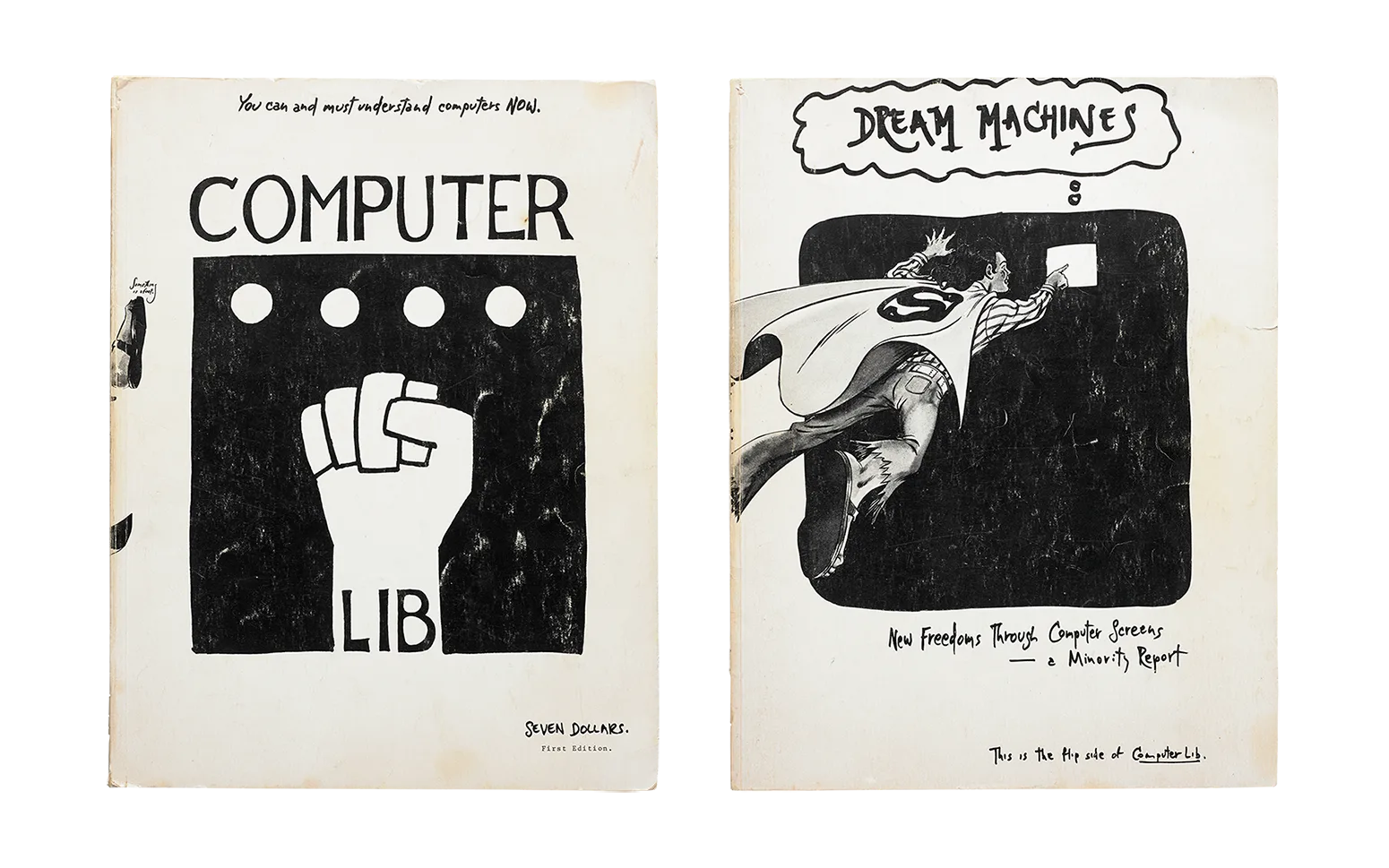
Nelson’s double book Computer Lib / Dream Machines
Source: NELSON, Theodor H. Computer Lib / Dream Machines

Nelson’s double book — Computer Lib / Dream Machines — is considered by some theorists[1] to be the most important work in the history of new media. In it he urged users from the lay public to resist the dictates of professionals in the computing fields. He argued that “computer experiences are media, which should be designed; and this design should be a creative process that takes the audience [the users] into account”[2]. He further maintained that in future media and systems we would find design that also integrates the emotional aspect of the design process. He also spoke about the “engineering” approach to design:
“When computer programmers or other technically minded people design a particular system without more general thinking, things are likely to be neither simple nor combinable.”[3]
Nelson’s main idea is the docuverse, that is, a space in which it is possible to overcome the limitations of the four walls of (physical) paper mentioned above. In the book Literary Machines, Nelson writes about this space:
“You will be able to create links — comments, personal notes and other connections — between places in documents and leave them there for others to follow later. We will even be able to publish these links. […] Any document can quote another, because the quoted part is brought over — and paid for — from the original at the moment the request is made; with automatic royalties and authorship information.”[4]
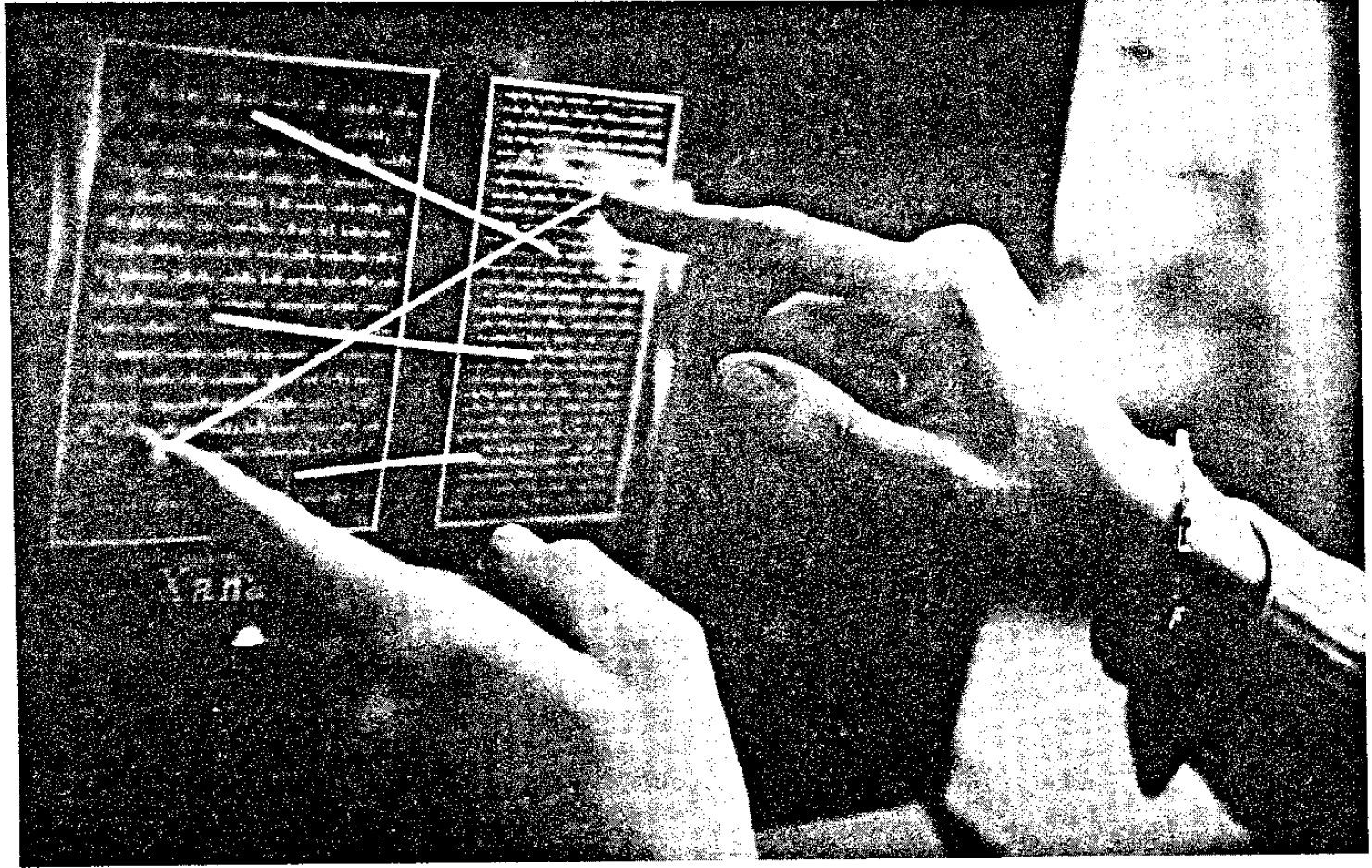
The project that was to fulfil the vision of the docuverse was precisely Xanadu, and Nelson was the first to call the mechanism of links hypertext, as a formatting of texts that cannot be displayed on standard, linearly displaying media. The individual documents in Xanadu exist in a so-called 3D hyperspace in which windows levitate; the parts of the texts marked as hyperlinks are connected by visible lines. A feature of Xanadu was meant to be that these connections are dynamic; if we quote some part of a text and the source text is changed, the quotation we have borrowed changes automatically as well. Xanadu was also meant to include versioning and the possibility of creating new branches of documents by copying, which brings Xanadu close to Engelbart’s NLS, which implemented this “forking” too.
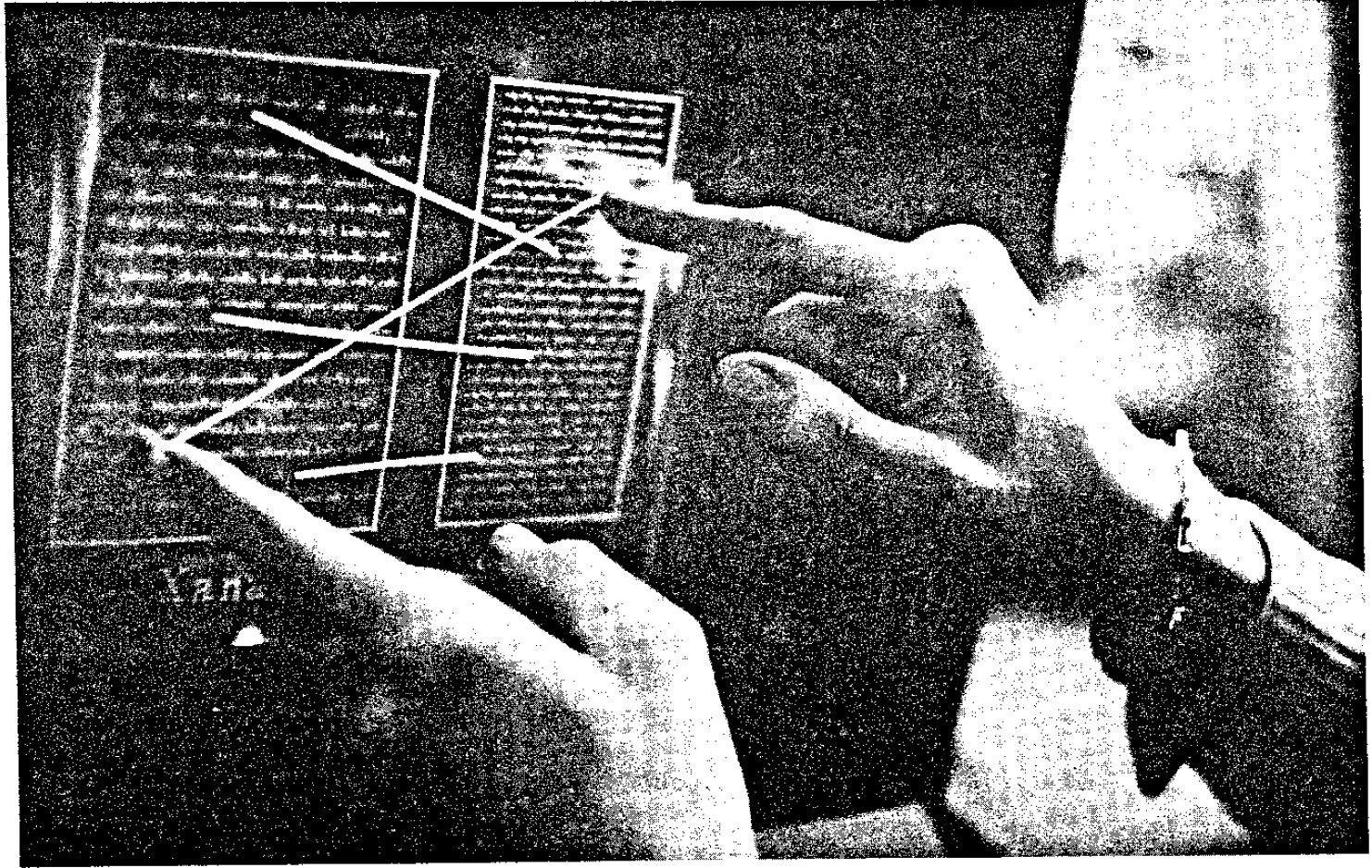
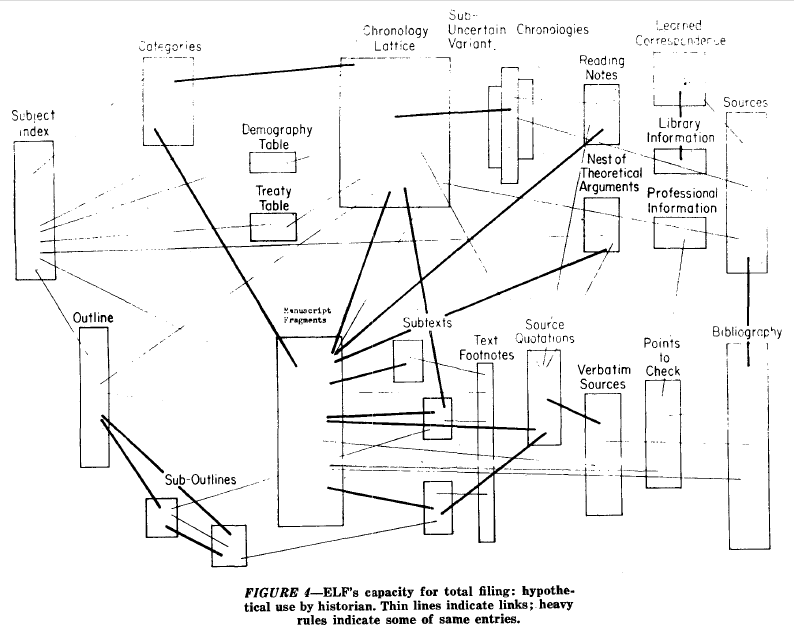
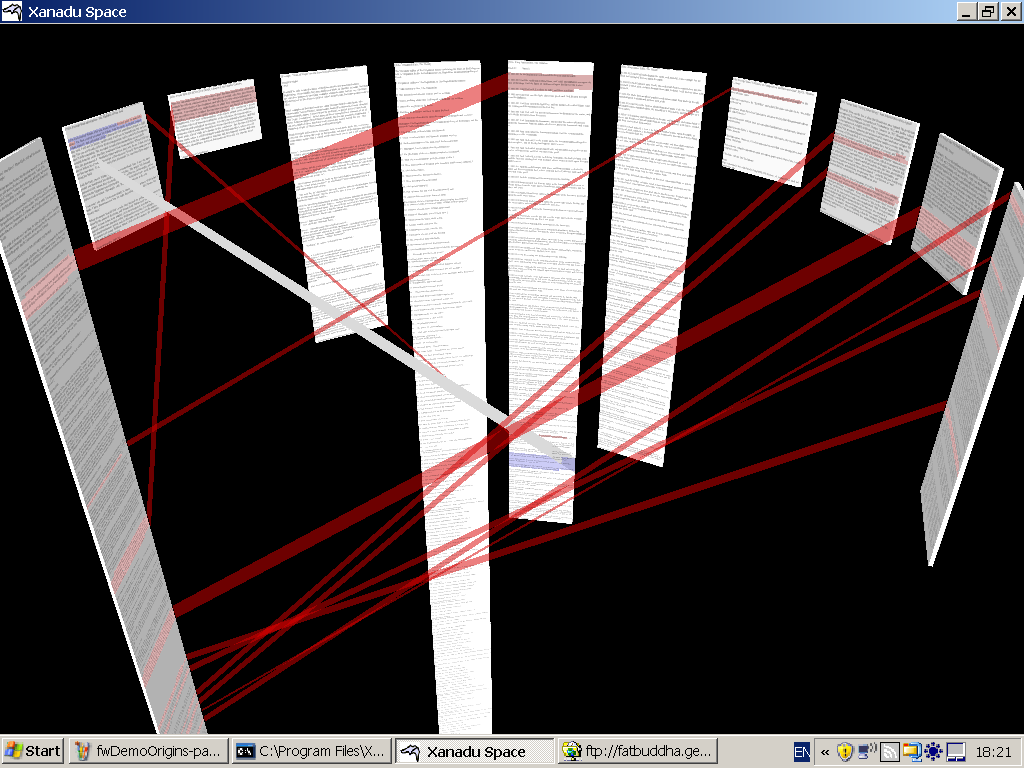
Project Xanadu: an implementation of Nelson’s ideas about what hypertext should really look like.
Source: Hypha Digital Garden, Project Xanadu, xanadu.com
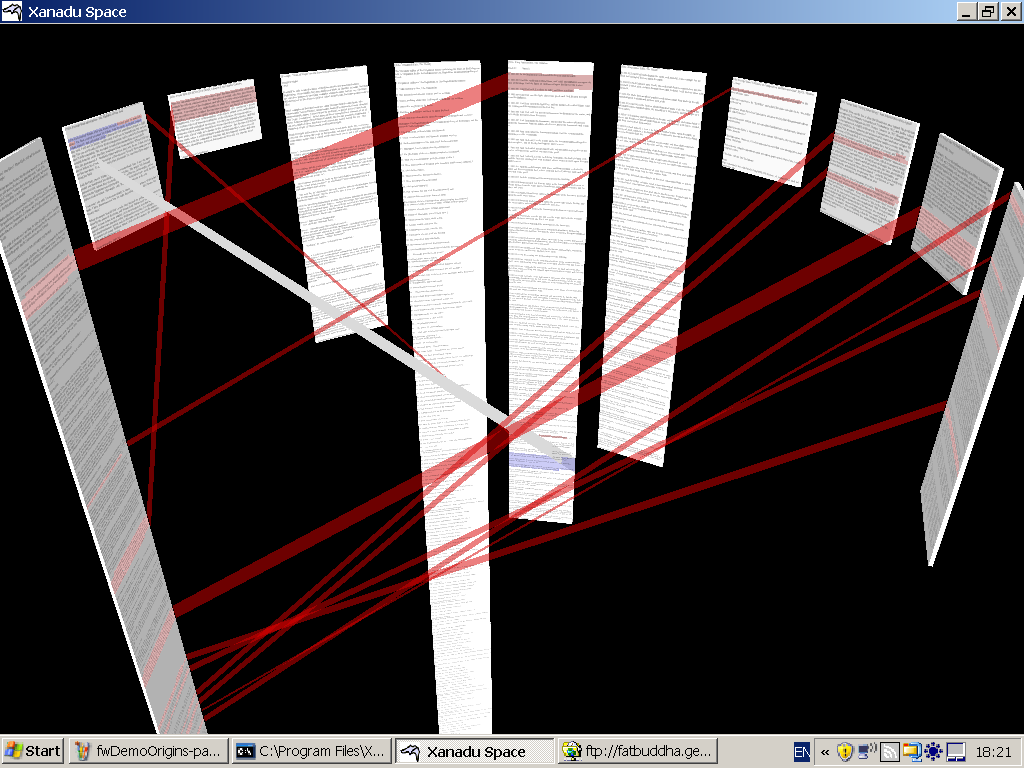
Unlike Engelbart, however, Nelson never actually fully realised his vision. Even the current version, named OpenXanadu, from 2014 contains only a fraction of the envisaged functionality. Nelson never considered himself an engineer, rather a passionate computer fan, and so we may ask whether the incredible dragging-out of the Xanadu project is not due to the fact that Nelson mostly had to rely on others — programmers — who were called upon to bring his creative ideas to life.
A Brief History of the Web — a five-part series:
- Part 1: Nikola Tesla, H. G. Wells and Vannevar Bush
- Part 2: Douglas Engelbart and NLS
- Part 3: Ted Nelson’s Xanadu — you are reading it
- Part 4: The beginnings of HTML, Aspen Movie Map and HyperCard
- Part 5: From the birth of the Web to 2007